Hot weather crochet: How to crochet in the summer
As the weather turns warmer in the northern hemisphere, though as I write this, the sky is grey and a thunder storm is on it’s way, the desire to crochet larger chunky makes such as blankets, or cosy sweaters tends to wane.
But many of us still feel that hankering to crochet, to keep our hands busy.
So here are some of my thoughts on how to crochet your way through hot weather. I’ll focus on which fibres work best and suggest some different kinds of projects to try.

This post contains affiliate links. This means if you click a link to a product and go on to make a purchase, I receive a small percentage of the sale at no extra cost to you. You can read my full affiliate disclosure here
What are the best yarn fibres for hot weather?
Let’s start with what yarn to use.
I apologise if this is too much information, but I am prone to getting sweaty hands in the heat.
If you’ve ever tried to crochet just after washing your hands or putting on hand cream, you’ll know how this can impact the flow of your yarn through your fingers. It gets stuck and tangled and is just no fun.
Though you might not immediately think of it, the type of fibre you use can help or hinder this.
To counter the sticky yarn problem, I suggest using a sweat wicking fibre. These tend to be wool, cotton, bamboo, linen and other natural fibres.
We often think of wool as a warming fibre but it can also keep you cool. If you think about a sheep, it’s fleece needs to allow it to cool in the summer as well as protecting it from the cold in the winter.
Cotton is most commonly used in summer garments, both on the high street and in the yarn community.
If you missed my recent post all about cotton, you can learn more about the fibre, why it’s great for summer and read my reviews of some popular cotton yarns here.
Even though cotton is a firm favourite, some find that it can still be a bit sticky and difficult, especially if it’s non-mercerised.
If that sounds like you, try something with a bamboo element or blend. Bambook has a silky soft feel which helps it gulide
My favourite bamboo yarns to date are Scheepjes Bamboo Soft, which is the fingering weight yarn used in the Chakra Shawl (pictured above) and King Cole Bamboo cotton which is a DK yarn (used in the keep it simple sweater).
Bamboo cotton blends are definitely in favour with me at the moment. They have the durability that comes with cotton but amazing softness and drape.
If the heat troubles you then my I advise, based on my personal experience, to stay away from acrylic yarns.
Acrylic fibre does not easily absorb water, so it can just make the problem worse. Imagine trying to dry your hands on a plastic bag instead of a cotton tea towel…
What yarn weight is best for hot weather crochet?
Continuing on from fibre, the yarn weight you use can have an impact too.
For me, the weight of yarn I work with naturally decreases as the temperatures increase.
Summer is is a great time to work with lightweight yarns such as 4ply / fingering, or even lace weight, but I work with double knit a lot too.
Aran / Worsted can work too, as in the Summer Solstice Tee (below) but it’s really a personal preference.

The weight of yarn is likely to contribute to the weight of the project and in the heat, it’s about keeping things light!
If you are really game for a challenge, then why not think about trying crochet threads? Most often it’s made from mercerised cotton and is commonly used for lace work such as doilies and motifs.
Working with threads is a skill in itself but can produce some absolutely stunning intricate items.
If the fine yarn puts you off, it doesn’t rule out thread all together. As with the Smell the Roses Poncho, you can double it up with other yarns and use it in all kinds of creative ways.

This is all my personal preference of course, but, in my experience, smaller balls and less hoiking of yarn results in less sweaty me!
Types of projects to crochet in hot weather
It doesn’t take much thought to suggest that you probably do not want to be crocheting out in the garden, park or beach from under chunky blankets or thick sweaters in the height of summer.
Even from the sofa, on a warm evening, that isn’t ideal.
Start small
The first thing that comes to mind when I think about what to make in summer is the size.
Working on small items gets away from the issue of being covered with extra layers of fabric.
I’m thinking amigurumi, homewears, face or dish cloths, towel toppers, bags (especially bag for life market bags) and, if garments are your addiction, items like socks or lightweight vests are great to try.
The imperfect summer vest uses a linen chainette yarn to create a lacy cami vest top.

Small accessories are great to make too.
Wrist warmers, hats and cowls (scarves can start getting a bit large) are great items to make in the summer if you’re looking for smaller items.
They may sit in a draw until late autumn but it’s a good way to get ahead for the cooler months and, dare I say it, get started on your Christmas makes?
You can find some suggested summer patterns here
Size matters but it’s not everything!
If larger projects are your jam then all is not lost.
Large shawls can make really great summer projects.
I recommend choosing something with an open lacy pattern; although the overall finished area of such a project will be large, the project as you work it will be smaller when folded.
In addition, the open nature of the stitch work means it won’t feel like you’re sat under a blanket.
I made the Perceptions triangle scarf last summer and released it as a free pattern. It is a large lace pattern shawl made with a cotton blend, the delectable Rico Creative Cotton Degrade, which has some of the most beautiful colour combos I’ve seen in an ombré yarn range.

(I didn’t finish the cake and am still thinking about rejoining the yarn and going larger on this shawl as I have a 3rd colour left to work through!)
Get your crochet motif on!
If you’re a blanket addict, there is still hope for your summer crafting. Pick something that uses motifs so you can work on small pieces at a time.
I love having those ongoing projects where you can create them little by little. Motifs that take 15-30 minutes are perfect. Especially if you are only able to snatch small windows for crocheting.
By the time you come to joining them, the chances are that autumn will be well on it’s way.
I made the original version of the Bobble pop blanket over the course of a year, a couple of motifs a week created a full throw size blanket that has lived on my sofa the past 6 years!

Motifs can be used for way more than just blankets. They are great for garments too, or bags, cushions or toys (I’m thinking of the Heidi Bears range in particular!)
Whether it’s squares, hexagons or circles, and in any fibre, motifs are a sunny win for me!
Granny square bags are very popular at the moment so may be worth a try.
Try crocheting something new
I’ve tried to cover a range of projects from different angles here, but maybe a lot of the suggestions I have made here are not the kind of things you would normally work on.
The way I see it, that’s even better. What an awesome opportunity to get out of your comfortable habits and try something different.
Plus, if you’re starting small, you have nothing really to loose, you can easily frog it and start over.
Let’s take socks as an example. They are generally pretty small and you get 2 chances to make them work.
I know a lot of crocheters steer away from these but I am a definite convert.
You could check out my free step on sock pattern or learn more about the anatomy of crochet socks if you need convincing.

I hope I have given you some food for thought and reassured you that just because the sun is out, the hook doesn’t have to be put away.
I’ve been inspired to think about the summer with this post, so I’m off to spend my weekend pulling apart a poncho I made years ago with Some lovely Rowan linen yarn (I got it on sale!). It is beautiful, but it’s too big around the neck so I don’t wear it. I’m going to see if I can turn it into a brand new summer vest top design I’ve had rolling around in my head for a while!
Watch this space!
update…
I turned that yarn into a fun open summer top called the summer time hangout… it has excellent ventilation!

Happy Hooking
Dx
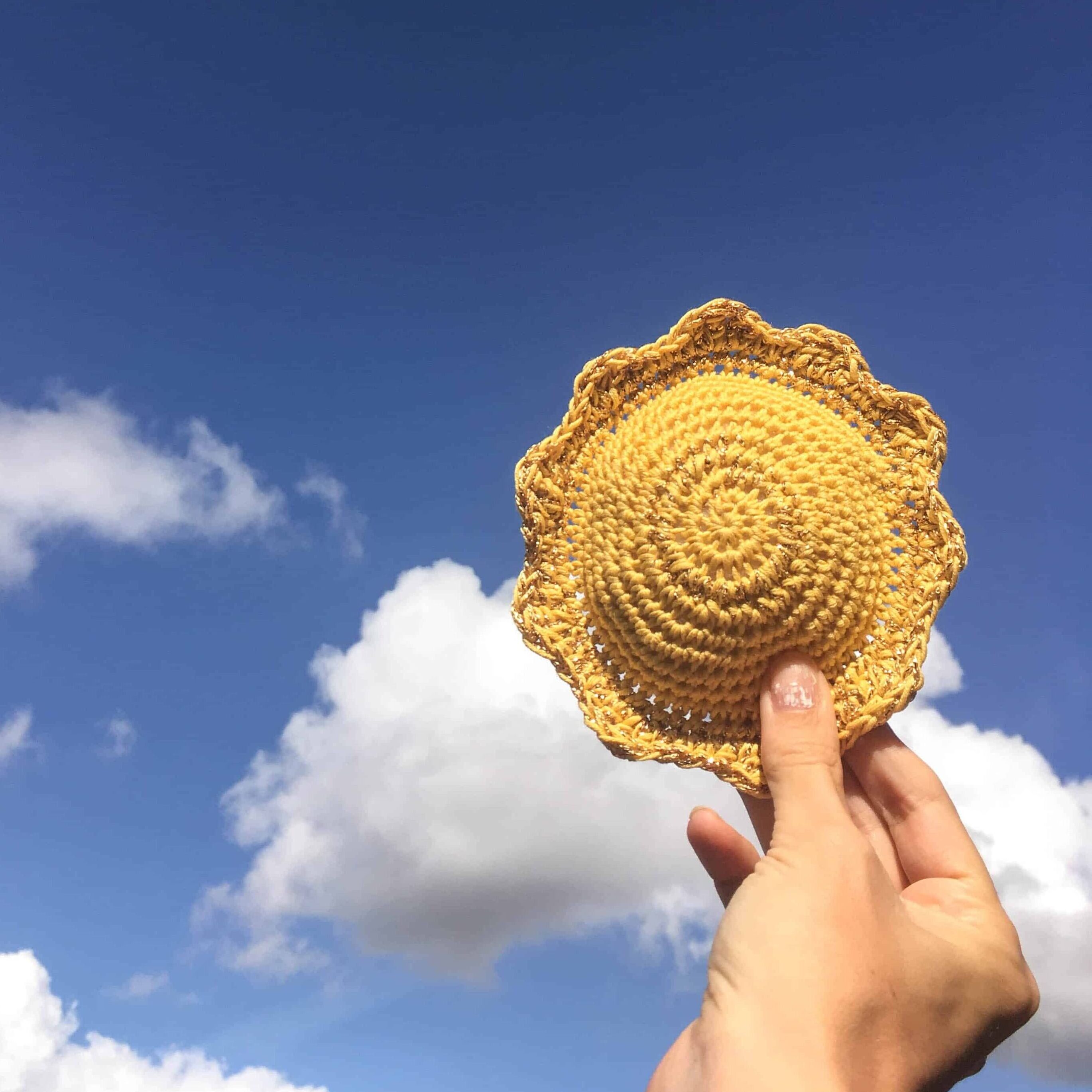
P.S. The image you see in the header of this post is the Pin Me Sunshine pin cushion which is a free pattern you can find here.


Never at a loss for topics, you are ! 😀
Haha. My brain is busy!!!