Cotton Yarn: What, Why, How, and a nod to my favourites!

My interest in crocheting with cotton was really sparked back when I began the design for the Maslow’s Rainbow CAL. I knew it was a summer top and instinctively wanted to use cotton, though I didn’t know why.
The process of researching which specific yarn I wanted to use took me down into a rabbit warren of learning about cotton.

This post contains affiliate links, which means that if you click through to the site and go on to make a purchase then I will receive a small commission at no extra cost to you. You can read my full affiliate disclosure here. I have not been paid by any yarn brands for these reviews, I selected the products based on what I have worked with and this is a reflection of my experience!
I became a little obsessed with finding something affordable as well as having the right properties for the top.
You know how the internet can be a time vampire? Well I lost hours umm-ing and ach-ing about which yarn to try, I ended up with Scheepjes Stone Washed XL (which is a blend), but and have since tried a whole bunch of others!
The purpose of this post is to save you those same hours and share what I learned about cotton as a fibre and about which yarns I have since discovered!
The whole process sparked my interest in beginning to understand what fibre worked for what type of project and you can read more about choosing suitable yarns here.
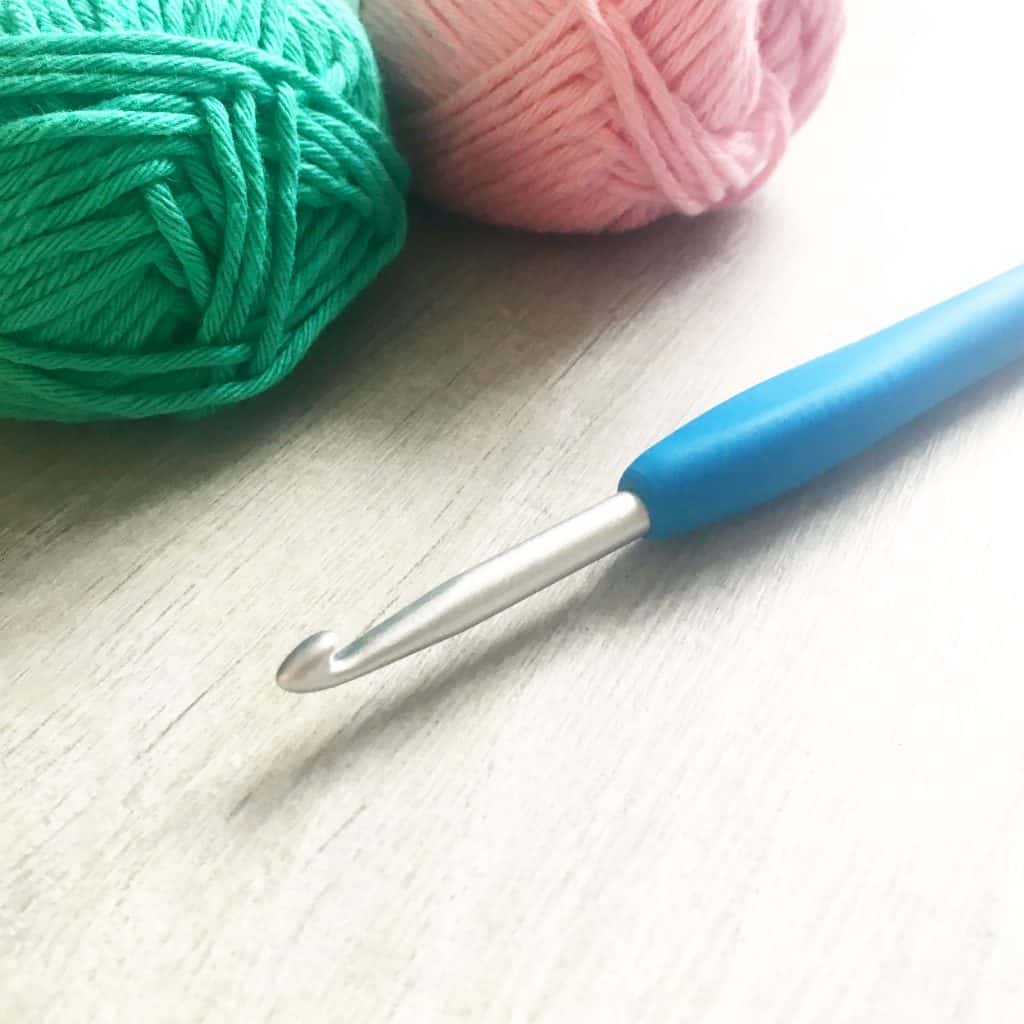
First of all, lets talk about what cotton is, where it comes from and what to look for when you’re browsing the shelves of your local yarn shop.
What is cotton?
Cotton is a natural fibre which grows with the seeds on a cotton (gossypium) plant and has been used to make fabric for around 7000 years.
How is cotton yarn made?
Put very simply, the fine fibres are harvested, ‘carded’ or combed to remove the seeds, spun together into thread and then woven into fabric.
If you’re interested in the manufacturing process, I found this beautifully hypnotic video on youtube which shows the process from harvesting to finished fabric. The yarn manufacturing process is something that I know embarrassingly little about, but I would love to dive into the topic in a future post!
What are the properties of cotton yarn?
Cotton yarn is soft, absorbent, strong, durable and holds colour well. This combination of properties are what makes cotton the most commonly used natural fibre in the world.
The natural cellulose in the cotton fibre is said to help draw heat from the body which is where its reputation for being a breathable, cool fabric comes from and why it’s the go-to for summer clothing.
The different types of cotton
There are different species of cotton plants which produce different types and qualities of cotton.
Egyptian and Pima cottons are touted as more luxurious cottons because they have longer, silkier fibres and feel softer to the touch. The price reflects this.
They are both grown from the same species of cotton plant (gossypium barbadense) which only thrives in certain climates. The difference between the two is where they are grown, with Pima cotton originating in Peru (though it is also grown in the US and Australia), and Egyptian cotton (shockingly) grown in Egypt.
What is mercerised cotton?
When I first started working with cotton I also kept seeing this word ‘Mercerised’ and had no idea what it meant. I just noticed that the mercerised yarns looked a bit more shiny!
I wasn’t too far off!
Mercerisation is a process where the cotton is given an alkali bath which does indeed increase the sheen but also strengthens the yarn, increases it’s capacity to hold dye and makes it more resistant to shrinking.
Non-mercerised cotton keeps that natural look and softness and is more absorbent, though the colour may fade faster with continued exposure to sunlight. Both types are used in crochet and it’s worth considering what your project is for as well as your personal preference before making your choice.
What to look for when buying cotton yarn
When you’re looking to buy a cotton yarn to crochet with, the options can be overwhelming.
Do you stick with 100% cotton or one of the blends? And if you’re going for a blend, what are the differences between the synthetic and natural blends?
Most yarn descriptions should help you decided on this, though, in my opinion, there is no substitute for having a good squeeze of the yarn itself to decide if you like it. Touch is such an important sense which can tell us more than any ball band!
100% cotton tends to have very little elasticity, which means it keeps it’s shape but leaves little wiggle room.
Cotton fabrics however, can stretch out of shape with wear or use. They usually shrink back with washing but this is something to think about when crocheting with cotton.
The type of stitch pattern you use will impact the stretch. So if you use a simple single crochet stitch to make a plant pot for example, this will likely keep its shape very well, but if you use an open lacy pattern then you will have more movement (drape is another useful property of cotton!).
You can also wet or steam block cotton yarn to ensure it keeps it’s shape.
Cotton is (generally speaking) machine washable and can withstand much higher temperatures than acrylic yarn or wools. So if you want to make something like a market bag which you can just throw in the machine then cotton is your winner!
So that’s a very quick summary of where your cotton comes from and what the various types are you may see as a crocheter – we are so spoilt for choice!
Cotton Yarn Reviews (for crochet)
So here are my thoughts on the 100% cottons I have used. I’ve listed them by weight, from Aran / Worsted to, Double Knit and 4 ply, fingering and threads.
I’ve linked to some projects I’ve made with the yarns so you can get a good idea of how they look – it’s all very well seeing the pretty balls but I know I prefer to see what yarn looks like worked up!
Aran & Worsted Weight Cotton Yarns
Drops – Paris
- Ball Weight: 50g
- Length per Ball: 75m
- Typical Cost per Ball: £1.00
This is a 100%, non-mercerised combed cotton aran / light worsted weight yarn which is available in a huge range of colours for an exceptional price (50g . 75m balls).
I’ll be honest, I had avoided Drops yarns before because the low price convinced me the quality must be poor, the production methods questionable (I’ve yet to answer that question) or the cotton would be rough and no good for using for garments.
However, on a visit to a local yarn store, I felt a blanket which was made with it and I was surprised with how soft it was, so I decided to give it a go.
I used it with a 5.5mm hook to create my Play Time top and I found that the more you work it, the softer it gets. I went on to create the Summer Solstice top with it too.
It’s easy to work with for cotton (I find some cottons a bit ’sticky’), despite how sweaty my hands get in this heat (tmi?) and I would definitely recommend it as great value for money.
It is easy to wear next to the skin and wold be great for baby blankets. There was an occasional split here and there but really it was pretty robust!
I’ve also recently discovered that there is a version of Paris which is made from 100% recycled denim. I’ve not tried that yet but anything which is sustainable puts a big tick in my box so watch this space!

Lily Sugar & Cream – Solids
- Ball Weight: 71g
- Length per Ball: 109m
- Typical Cost per Ball: £2.50
This to me is the original classic home cotton. It’s a worsted weight reliable non-mercerised cotton.
I have used the denim colourway in the past to make my Indian Summer Tank top.
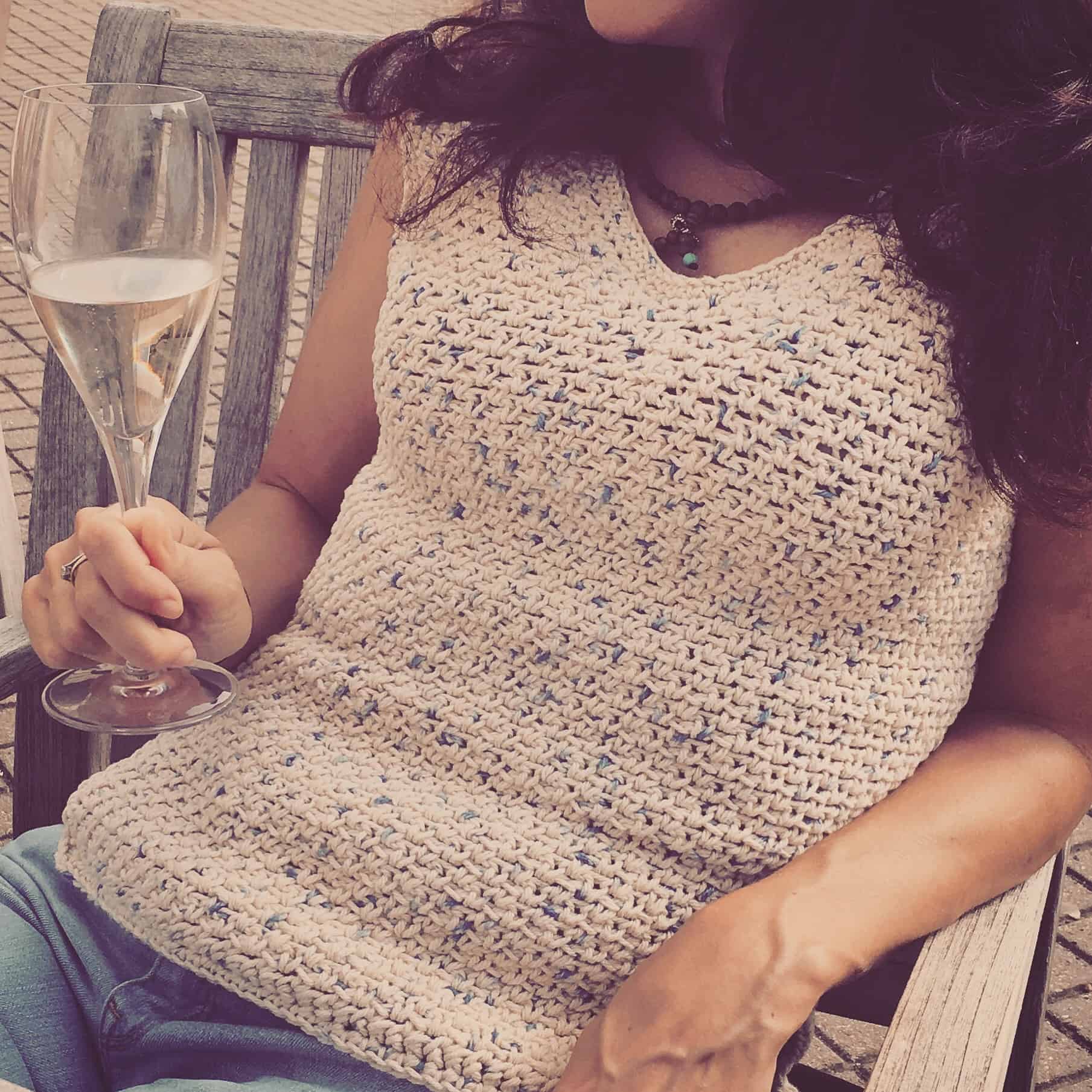
Like the Drops Paris, it softens with wear and is a good all round cotton which can be used for clothing, larger amigurumi and homewares. I’m going to be making some dish cloths with my left overs!
There is a huge range of colours including solids, ombres, stripes and twists. Lily Sugar n cream is sold in 73g (2.5oz, 109m) balls as standard but it’s also available in supersize balls of 113g (4oz, 185m).
It’s a classic American brand which is more readily available in the US than in the UK and why the ball sizes may seem odd to those more familiar with the metric system.
Paintbox yarns – Recycled worsted cotton
- Ball Weight: 100g
- Length per Ball: 155m
- Typical Cost per Ball: £3.50 (regularly on sale)
As we get more and more aware of the impact of climate change, a lot of people, myself included, are looking for more eco friendly yarns to work with. Cue the Paintbox Yarns Recycled Range.
Some of these are a cotton blend because of the yarn nature, but the range includes, Big cotton (a great chunky option for macrame), recycled ribbon (including a metallic option), t-shirt yarn as well as the worsted weight yarn I’m highlighting here.
Their recycled worsted weight cotton is great for homewares, blankets and will work for garments too. Watch out for a pattern coming to Love crafts soon!
I have tried these yarns and am a fan of them all… Except the t-shirt yarn if I’m honest. But that’s t-shirt yarn in general – I have bad form with it. Anyone who read the post where I tried to cover a footstool and ended up making a cat bed using it will understand! (I frogged the cat bed by the way, and donated the yarn to a craft charity!).
One of the things I do outside Dora Does is to write crochet patterns for yarn brands like Paintbox. I was lucky enough to get the opportunity to collaborate with them to produce some patterns for this recycled range. Take a peek at the Rug, Floor Cushion and Basket patterns here (all available to download free on the Love Crafts site).
I am a huge fan of Paintbox yarns in general. I’m not getting paid (even in yarn) to say that either. I like the attitude of the company and I think their product is good quality and great value for money. It is a really accessible range!
Okay, I’m getting off topic here. Back to the cotton yarn.
Double Knit Cotton Yarns
Drops – Muscat
- Ball Weight: 50g
- Length per Ball: 100m
- Typical Cost per Ball: £1.60
I used this mercerised cotton to make the DK version of the Maslow’s Rainbow top during the live CAL.

I confess that I’ve often avoided mercerised cotton as I’m not keen on the shiny finish and thought it would be too hard for clothing as it feels quite solid to the touch.
However, I was pleasantly surprised. Like the Paris, it began to soften as I worked and I think that as I wear and wash my top it will continue to do so. It’s light enough to wear in the summer heat too.
Sold in 50g (100m) balls, It’s also available in a huge range of colours and has a very reasonable price tag like the Paris, so another thumbs up from me!
We are Knitters – The Cotton Wool
- Ball Weight: 100g
- Length per Ball: 212m
- Typical Cost per Ball: £8.00 (look out for regular offers via the We Are Knitters Mailing list)
I tried this 100% Peruvian Pima Cotton recently when taking part in a Knitting in public day supported by We are Knitters.
I spent the day crocheting (not knit!) on Primrose Hill in London with some amazing crocheters.
We are Knitters are an independent Spanish brand and I have to say this yarn was beautiful. Super soft and lovely vibrant colours. The price is higher but the quality reflects that.
I have used it since in the Bisou Pillow, made with the stunning hand painted sprinkle colourway.

I would definitely use it again for something a bit special. Indeed, I gifted the headband I originally made with this yarn before I could get a picture!
Unlike the other dk cottons, this is sold in 100g balls with each ball giving you 212m of yarn. Although it’s classed as DK, the We are Knitters Site recommends a 5mm crochet hook and it’s on the heavier dk side and could pass for a light worsted weight.
Paintbox Yarns – Cotton DK
- Ball Weight: 50g
- Length per Ball: 125m
- Typical Cost per Ball: £2.50 (again, regularly on sale)
Another entry from Paintbox!
The paintbox yarns cotton DK comes in a choice of 56 colours which gives it a head start! I used it to make my Lean on Me Pillow and it is wearing really well with no pilling or bobbling (and I lean on it frequently!).
A 50g ball gives you 125m with multi pack offers available for larger projects
I like this yarn because it is not super shiny like the Drops. I think it is non-mercerised (the description does not specify). It has a much more natural texture and feels softer, which for me is particularly important for garments.

Rico Essentials – Cotton DK
- Ball Weight: 50g
- Length per Ball: 130m
- Typical Cost per Ball: £2.89
Generally I am a huge fan of all Rico yarns. For me, they strike a balance between good quality and an affordable price point.
The essentials cotton continues in this vein. With a 50g ball giving you 130m this gives you most for your weight (though not by much!) and, like Paintbox, has a huge range of colours to choose from.
It’s a little more expensive than the Paintbox and looks shinier (though not as shiny as the Drops!) but retains the softness.
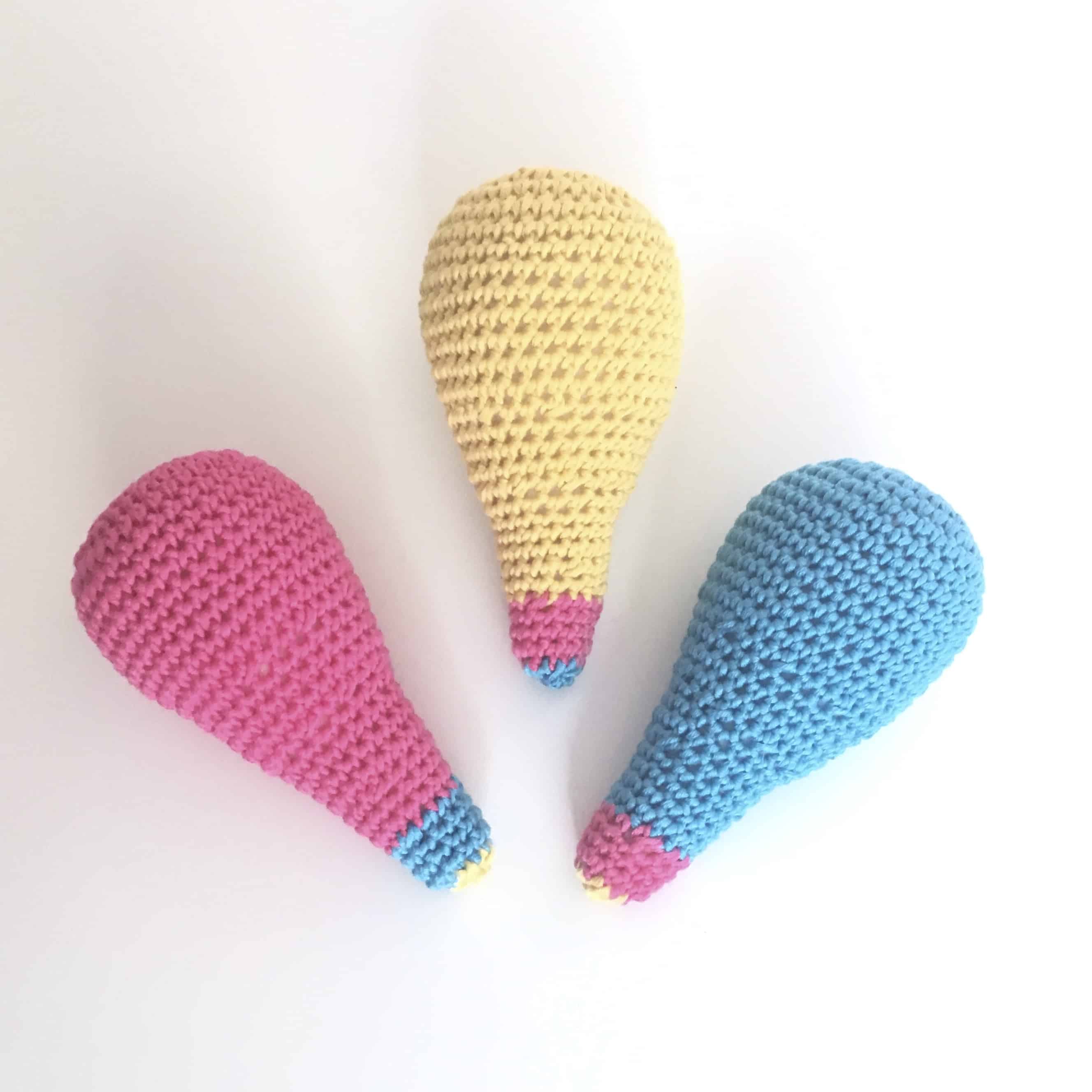
I’ve been using this cotton for a long time, you’ll see it in several of my you tube tutorials and in my Bright Ideas Light Bullbs which were inspired by my logo.
I’m all about yarn and ideas!
4 ply / Fingering Weight Cotton Yarn
DMC Natura Just cotton
- Ball Weight: 50g
- Length per Ball: 155m
- Typical Cost per Ball: £3.79
I love the DMC Natura 4 ply range.
It is unmercerized so keeps the natural look and comes in a beautiful range of colours which all have a slight muted soft quality.
I used it to make a Heidi Bears Hippo many years back and in various other amigurumi since. I found it to be a little splitty, which can be common with cotton, but with care, the finished look was lovely.
With 155m per 50g ball and a whopping 65 colours to choose from, it will definitely keep you busy!

Mila Mia – Naturally Soft Cotton
- Ball Weight: 50g
- Length per Ball: 165m
- Typical Cost per Ball: £4.49
I used this cotton on the California Dreams summer top I designed for Inside Crochet (Comming soon to ravelry and the usual platforms!)

It was lovely and soft and genuinely a joy to work with and it comes in a range of 20 shades.
The description categorises it as sport weight but it felt on par with most typical sock yarns. I wonder if, because cotton yarns tend to feel more solid (less squishy?) than wool and acrylic, they may work up a little heavier for their weight. That’s just a hunch though.
DMC Threads
Honestly, if you want to crochet with thread, DMC is the standard.
Available in a range of weights, DMC mercerised cotton thread (the one I have used most is called called Perle) is really my go to when I’m looking for something this fine.

Thread weights are measured differently (with numbers) so I haven’t been specific about the amount you get as there is such a variety. Information for another post I think!!
DMC seems to be the industry leader in this area and is widely available in a huge variety of colours. I have yet to design any projects in a yarn this fine but have used it to make crochet jewellery and Christmas decorations.
Working with thread of this size is such a skill and I admire those who have the patience to do it on a regular basis!
The also rans…
I could go on all day about different yarn, but instead, I’ll give you some more yarns that are on my wish list…
- Scheepjes Cahlista – aran weight and looks similar to drops paris
- Scheepjes Catona – mercerised 4 ply in a range of ball weights and colours
- Stylecraft Classique Cotton DK – because it’s stylecraft and their other yarn is a solid standard!
- Lion Brand 24/7 Cotton – Partly because I like most LionBrand yarns I have tried and this is a worsted weight mercerised cotton – maybe I will like the mercerised feel in a heavier weight yarn?
I’ll update the post as I try new yarns. If you have a favourite cotton yarn, I would love to hear about it so drop a note in the comments!
I hope you find these reviews useful – this post ended up a lot longer than I intended but apparently I’m passionate about my cotton!!
I hope you’ll enjoy using some of these yarns for your projects.
Happy Hooking
Dx



Hi, I can’t find the necklace pattern pictured in the dmc thread section of this post and would love to make it for my sister’s wedding! Could you please let me know where it is or where you found it?
Hi, it’s a lovely design isn’t it! I found it on ravelry – it’s called the Chandelier Necklace linked to B hooked’s account. However, I checked my favourites and it looks like it’s no longer available. I recall this one was just a schematic / diagram rather than a written pattern so you may still be able to find it somewhere on line.
Any thoughts on “I love my cotton”? Seems much softer than others but says it is 100% cotton
I’m not familiar with that particular yarn name, but it could be due to the type of cotton used or the way it’s spun to increase softness.
Thank you for that blog. I’m still a little bemused as to what to use and for what. I guess it’s trial an error to a certain extent. I e been using the Scheepjes Catona for the beachcombing blanket cal by Coastal Crochet. It’s the first time I’ve used cotton to make anything with and I’ve found it really easy to work with. Not split or done anything funny. The colours are good as well.
I have heard good things about catona – (I love scheepjes colours too!) it is mercerised which helps stop it splitting! The project sounds lovely. There is still an element of trial and error – which is part of the fun!! It takes a while to get to know what you like and what it works for!!