Factors that make a crochet pattern difficult or complex
Recently I published a post which looked at how crochet patterns are rated for difficulty. Understanding this allows you to asses whether a project’s complexity is a good match for you when choosing a pattern.
My original intention with that post was also to take a look at what actually makes a crochet pattern difficult in the first place. However, this investigation opened up a bit of a can of worms and I realised that the topic deserved its very own space.
So in this article I’m going to have a go at identifying the properties that make a crochet pattern challenging and, by extension, what skills and knowledge will help you to tackle pretty much any pattern.
What makes a crochet pattern difficult?
This is a question I have been asking a lot recently.
Why do some patterns seem so much more challenging than others?
What is it about them that makes them hard?
I have also been asking my instagram community and readers of the WiP Tip what they consider, in terms of difficulty, when choosing crochet patterns.
The answers from all angles have been interesting and insightful.
There were a few themes which repeatedly came up that I’ve not really seen talked about in skill level ratings. These include; the importance of understanding stitch anatomy, stitch placement and the level of attention needed for the project.
I’d like to address these first and will come back to the more common indicators of difficulty (complexity of stitches, techniques and colourwork etc.) afterwards.
The goal of this article is not to create an exhaustive list of the things that can add challenge to a project (I’d be here all year!). My aim is to address the key themes that contribute to complexity so that you can identify where you might want to up-level.
Understanding stitch anatomy
As someone who learned crochet from a ton of different YouTube videos and a lot of trial and error, I didn’t initially get a solid grounding in crochet fundamentals. The kind of foundational knowledge that allowed me to understand how a crochet stitch is made up was missing.
Like many crocheters, I just kind of figured it out as I went.
Then, and I don’t remember when, something just clicked. I finally ’got’ the way a crochet stitch was built and how each part related to the others. Things like back and front loops, posts and where the yarn over goes suddenly slotted into place in my brain.
For me this opened my eyes and was a massive shift in what I was able to achieve with a crochet hook and some yarn. There were a lot of “Oh, that’s what they meant” and “So that’s why my row ends always go wonky” type of revelations.
It’s for this reason that I wrote this post on crochet stitch anatomy and another on the 10 things I wish I had known as a beginner – because I would love to save other crocheters that period of confusion.
If you’re instructed to work around or between the posts of the stitch but you don’t really know which bit the post is then you’re going to come a cropper…
Likewise, if you’re not quite sure which stitch is the last one in the row, then your stitch counts are going to go wandering.
Understanding these foundations was akin to having the lights switched on. It’s like before I was trying to draw a picture wearing oven mitts and someone suddenly took them off and everything felt easier.
So I encourage you to get to grips with the fundamentals. I can’t emphasise enough how much it will help you progress with your crochet if you currently struggle with these things.
The importance of stitch placement
I still remember the first ever one star review I got on Etsy. (I’ve only had two and the second was because the maker couldn’t work out how to print their pattern…)
This review read ’I couldn’t make it work.’
That was it. They had never reached out for help and though I messaged them to offer it in response, I never heard back. I just sat there miserably staring at that single star (until I remembered that it’s just how it goes sometimes).
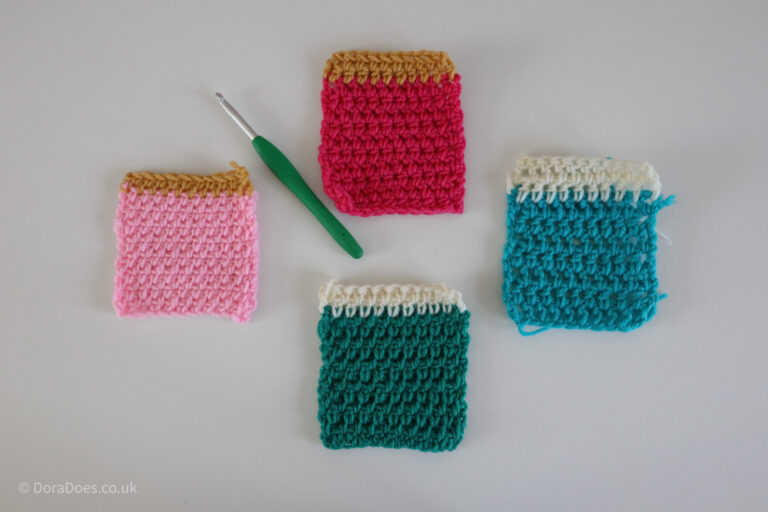
The pattern was my Southern pines sweater. It uses mostly US double crochet and post stitches, nothing dramatically challenging there. However, the placement of these stitches is everything in this pattern. If you don’t ‘see’ where the stitches are meant to be placed then you’re going to struggle.
Though I describe such things as precisely as I can in the pattern, some people need other ways to visualise it. I think that was what happened with this particular maker.
I have seen many others successfully make this sweater, so it’s another reminder of the different things we all find a challenge. It doesn’t say anything good or bad about the pattern or the maker. Just that we are all different.
This was probably the first time I realised what a big impact stitch placement has on how challenging a pattern might be to make.
If you’re just crocheting into consecutive stitches row after row or round after round, then regardless of what stitch you’re actually working, it’s going to be pretty straightforward. Importantly, it will be fairly easy to see if you’ve made a mistake and to go back and correct it.
If you’re following a pattern that requires skipping stitches here and there or working multiple stitches into one, then you’re going to need to pay more attention to where you put your hook. And if you make a mistake, it will take more effort to work out where.
I feel like this variation in stitch placement is a large part in what takes a pattern from ‘beginner’, where you can fudge it if you need to, to ‘intermediate’, where you really need to put your stitches in the right place to get the pattern to work.
The more I think about this, the more I think that stitch placement may be the pivotal part of pattern complexity.
Even just knowing that you need to be aware of where stitches are placed can make you more likely to accurately follow a pattern. Knowing what you don’t know, or ‘conscious incompetence’ (more about that later), is a great place to be because it gives you something to work on.
Attention levels
The amount of time and attention you need to invest in a pattern came up a lot in deciding whether to try a pattern or not. (This often translated as ‘can you crochet it whilst you watch TV, listen to a podcast, chat on zoom etc?’).
Sometimes we want those projects we can just make with minimal thought (once we get to know the stitch pattern) and sometimes we want more of an involved design that we can make step by step (think complex stitch patterns or colourwork charts).
I love this approach because it steps outside the more traditional idea of skill level into the realities of being a crocheter. Just because you can do the hard things, it doesn’t mean you always have to work at that level.
You can be the most experienced crocheter on the planet, but if you don’t have the mental wherewithal or inclination to follow that detailed chart with focused attention then you’re going to end up in frogsville, not chillout town.
Many crocheters do it purely for relaxation and the joy of the process, regardless of their technical abilities.
If that’s you, you probably want something you can sit on the sofa with and enjoy, that helps you unwind after a hard day or week. A pattern that’s complex enough to keep your attention, but not so involved that it sucks your energy.
I realised that this balance of challenge and ease what what I was trying to communicate when writing my post on mindful crochet stitches.
But as with everything related to ease/difficuly, what on person finds relaxing or an easy stitch to work, another may find more challenging. It’s very much a personal thing.
I recommend getting to know what stitches bore you and which ones you feel like you could happily work all day. Then make things that involve the latter. Of course this will vary over time and you can move to new stitches at your own pace.
Similarly, there are many people who love the challenge of an intricate pattern. Who relish producing amazing graphgans or creating beautiful tapestry, intarsia or mosaic colourwork patterns. I take my hat off to you for your patience!
With crochet there really is something for everyone. Getting to know what you do and don’t enjoy (and that that will change over time) is part of the journey.
“No matter how much crochet experience you have, you will make mistakes because you are a human.”
Complexity of stitch pattern and techniques
The last set of factors contributing to pattern difficulty are the ones which traditional rating scales focus on. These include the complexity of stitches or stitch patterns and other techniques (in which I include things like shaping and colourwork).
I hope that by now you will see that once you understand stitch anatomy and placement, stitch complexity suddenly doesn’t seem like much of a big deal.
Complex stitches are all really just variations on basic stitches or basic stitches worked in different combinations. Once you understand how those basic stitches are made up, you will probably find it easier to modify them accordingly.
Similarly, when you have a clear idea of how to place stitches, for example in both loops, front loops, back loops, around posts or you can understand placement instructions, then stitches with unfamiliar placement patterns will become less daunting to tackle.
With all that said, I don’t want to minimise the importance of practice and repetition here.
Just because you know how something works in theory it doesn’t mean you’ll be great at it right away – I have just started a beginners pottery course and I am being reminded of and humbled by this every single class.
I think it’s good to remind ourselves what it’s like to be new at something. Keeps us all on our toes.
Getting to grips with new or tricky stitches or techniques takes lots practice. There’s no getting around it and no substitute for experience.
So be patient whilst you build that muscle memory. And always be kind to yourself if you don’t get it first time – it’s just crochet!
Pattern clarity and instruction styles
I want to add a little caveat to this discussion and add one more thing to think about. That is the quality of the pattern itself.
We all have different learning styles, some of us like to use written patterns, some videos or pictures and some charts. This level of quality is key regardless of the medium you’re using.
With my thoughts on difficulty above I’m assuming that the the pattern or chart or video that you’re following is well written, clearly presented and accurate.
Because sometimes patterns are difficult simply because they contain errors or ambiguity. It happens.
Why does understanding difficulty matter?
Picking apart what makes a crochet project challenging is not just a theoretical exercise.
The whole point of breaking it down is that it gives you a clear path to tackling it. Knowing what the obstacles are gives you somewhere to start.
It allows you to progress through that learning cycle from ‘unconscious incompetence’ (I don’t know what I’m doing wrong) to ‘conscious incompetence’ (I know what I’m doing wrong and I need to practice the skills to get it right) to ‘conscious competence’ (I know what I did wrong and I can fix it so won’t do it again).
I hope that seeing things laid out in this way gives you a confidence boost in taking on a project that you might have previously given the swerve.
Making mistakes is important
I want to close out this article by stating that mistakes are an essential part of learning to crochet. Of learning anything for that matter.
No matter how much crochet experience you have, you will make mistakes because you are a human.
Making errors and learning how to correct them seems to be one of the most efficient way our brains learn. I listen to a neuroscience podcast called the Huberman lab which talks about this in various different episodes. So take the neuroscientist’s word for it, not mine!
No one can be perfect at anything all the time. And if you haven’t learnt by making mistakes then when you finally do make one, you’re not going to know how to fix it.
Yet another example of crochet imitating life…
One of the reasons I draw attention to embracing ‘failure’ is as a result of some feedback I got recently from a reader of the WiP Tip.
I had written an issue where I talked about the hours I spend frogging and reworking some things because they just don’t behave as I want or expect.
They sent me a lovely email saying how much better that made them feel because they had experienced the same thing and thought it meant they were doing a bad job.
The reader was new to crochet and was working through the Any yarn will do sweater. They shared some of the dead ends they’d gone down in the process (which showed me how much they were learning) and said that they were determined to keep trying.
This was music to my years. I know they will succeed because they now understand where things went awry and can carry that knowledge forward with them for this and future projects.
If those kinds of mistakes sound familiar, I encourage you to see them as wins (or at least valuable lessons). It’s a much more useful way to frame ‘getting it wrong’ than telling yourself you’re rubbish at something.
Which leads me to my final thoughts; keep experimenting at your own pace. It’s all practice and never a race.
I should put that on a t-shirt…
Happy Hooking
Dx
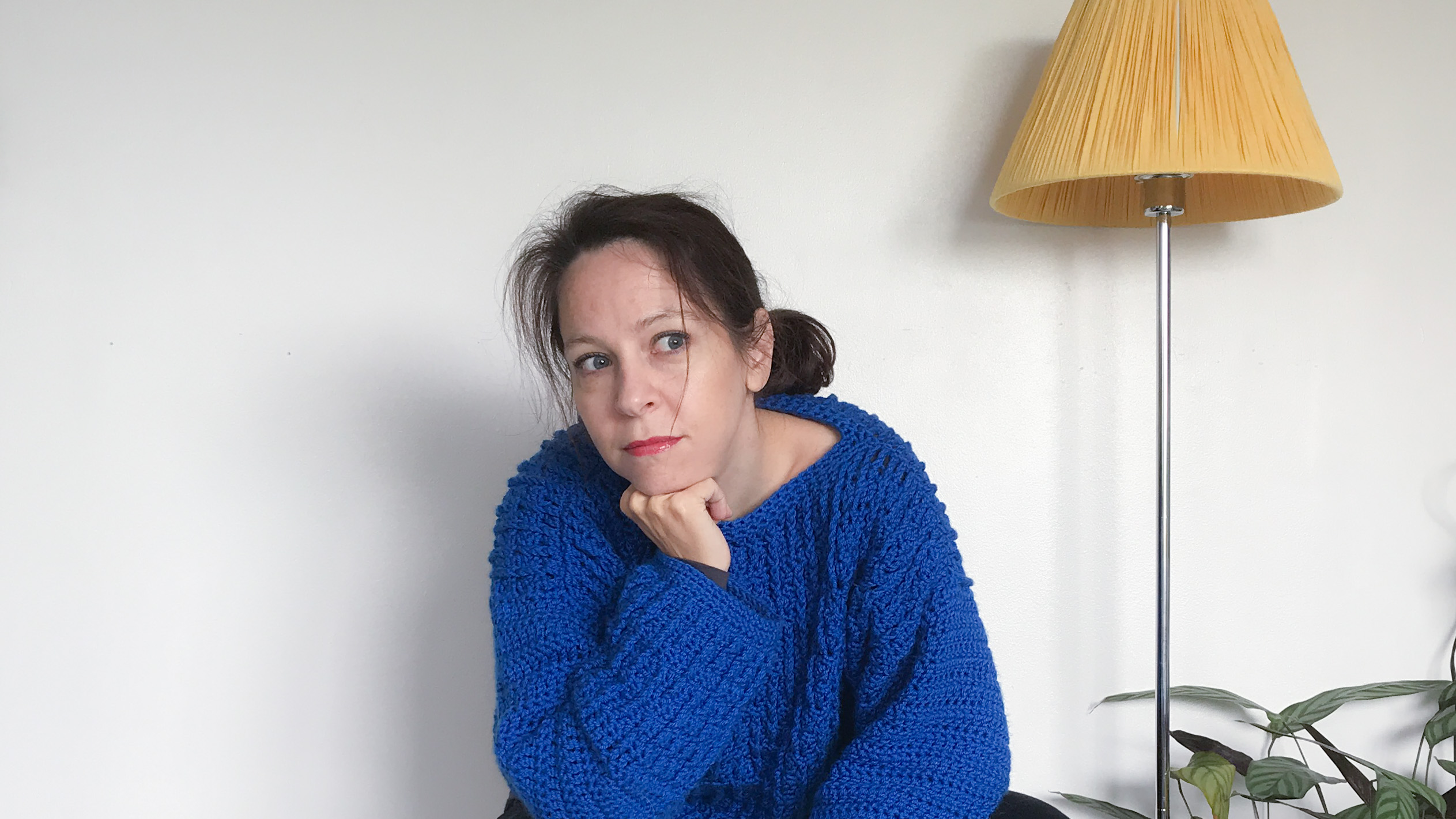
P.S. The header image of this post is meant to be me looking perplexed at the idea of complex crochet things. I’m wearing the So What Sweater which is not meant to be a complex sweater pattern (though it does use post stitches and stitch placement is important – but once you get to grips with it it’s pretty intuitive). It’s also available to read for no cost here.
😉



And where the devil are you going to file THIS bit of helpful thinking ??
Btw: “As someone who learned crochet from a ton of different YouTube videos” – you have NO IDEA how lucky you are to be so young. When I wanted to learn how to crochet, I had no-one around me who knew the first thing about it – or knitting, but I was quite good at that. I bought a couple of books about crochet, but as tutorials in the craft they were useless. So I decided to use knitting as a guide; which is why I now crochet like single-needle knitting; hook AND yarn in the right hand .. How many years ago did you teach yourself with the help of YooChoob ? – 6 or 7 ? And how many years ago would I have given my back teeth to’ve had something like that available ? – oh, I reckon around 55 .. Sighhh ..
Haha, it was 2012 I first picked up a hook… and was actually a kids learn to crochet kit from Amazon!! I soon moved to YouTube, though as a leftie trying to flip videos mentally was always fun. It definitely gave me an advantage compared to learning from paper patterns – I love the way you hold your hook and yarn though. I’ve seen it done by some others and it’s truly impressive!
Creates a problem in terms of gauge, Michelle: my stitches are all shorter ! But bloody neat. 😀
Ahhh, I see. I wonder if you yarn under rather than over as that can make rows shorter. The positive is that for a lot of designs it’s relatively simple (famous last words) to add rows to accommodate differences in row gauge.
No, not that: it’s the yarn coming from the right, that means there’s no stretching of each stitch by the hook as it’s made. More direct, you see. But yes, adding rows is fine.
Ahhh. I see. That makes sense – so interesting how these tweaks in style have an impact!
Thank you.
I’m an experienced hooker and still have issues. It’s art and like all art is part left brain and part right brain; pattern, construction and execution paired with color, intuition and yarn choice.
My grandmother taught me to crochet and, while I know I can crochet anything (anyone can who can hold yarn and a hook,) following a pattern can be an art in itself. It wasn’t too long ago that I learned to write out each step without abbreviations helped 1000% when learning a new pattern or stitch. When I learned charts, well, mental backflips ensued. Instead of having to visualize a stitch or pattern, there it was-magic!!
I have had skin and health issues that have kept me from crocheting for 2-3 years and for some reason your article renewed my crojo.
Thanks so much for your comments. You make a great point about following patterns being part of the challenge. Some find videos and charts easier, others the written word. I’m sorry to hear about your health issues and am happy to give you some motivation to return when it’s right for you. 🙂
Hi Dora! Thank you for these thoughts (and all the others by the way!). it’s allways a pleasure to read you and it’s very instructive. I thought my self a lot about many things you disccuss in your various articles.
Abour the difficulty level, I’m convinced that it’s a very personnal point of vue; as you said, someone could find a “easy” level ” actually difficult for him/her because ir’s a work he/she have never do!! I thought myself during a lonf time that garments were for the experts and professionnals!!
illogically I start soing doily’s patterns, even “highest level” and thought it was easy!!
My point is that for me the most important in this part , the “difficulty level” is explanations (even if it makes the paper longer) about the type of construction, the stitches (especially the special stitches), the way to crochet, the count of stitches in each round/row and the how to distribute the stitches in each round/row (between de simple stitches and dec/inc so that I can figure out the “formula”)… I think that the most it’s explained the clearest it is.
With all these explanation points, people can easily decide if the pattern is easy or not relaxaing or not for them.
I just would say a last thing : the charts!! That’s very important for me but there are few; so now I draw (big word!) them myself from the pattern.
These are mu (long) thoughts! I wish a nice and sunny we 😉
Roseline
Hi Roseline, thanks so much for sharing your thoughts. I don’t think you’re alone in the idea that garments are for experts – they really are accessible to most crocheters with some experience. It’s the learning to follow patterns that can throw some people rather than the crochet itself!
As for charts, they can be super helpful. I am trying to add them to more of my patterns but the last one I did took me 8 hours as they can be super challenging to do well when you’re new to the software to make them!!
Drawing them out from a pattern is a super useful skill to have (I do this too when I’m drafting patterns!)
Dora