What is Corner to Corner (c2c) Crochet? A stitch or design?
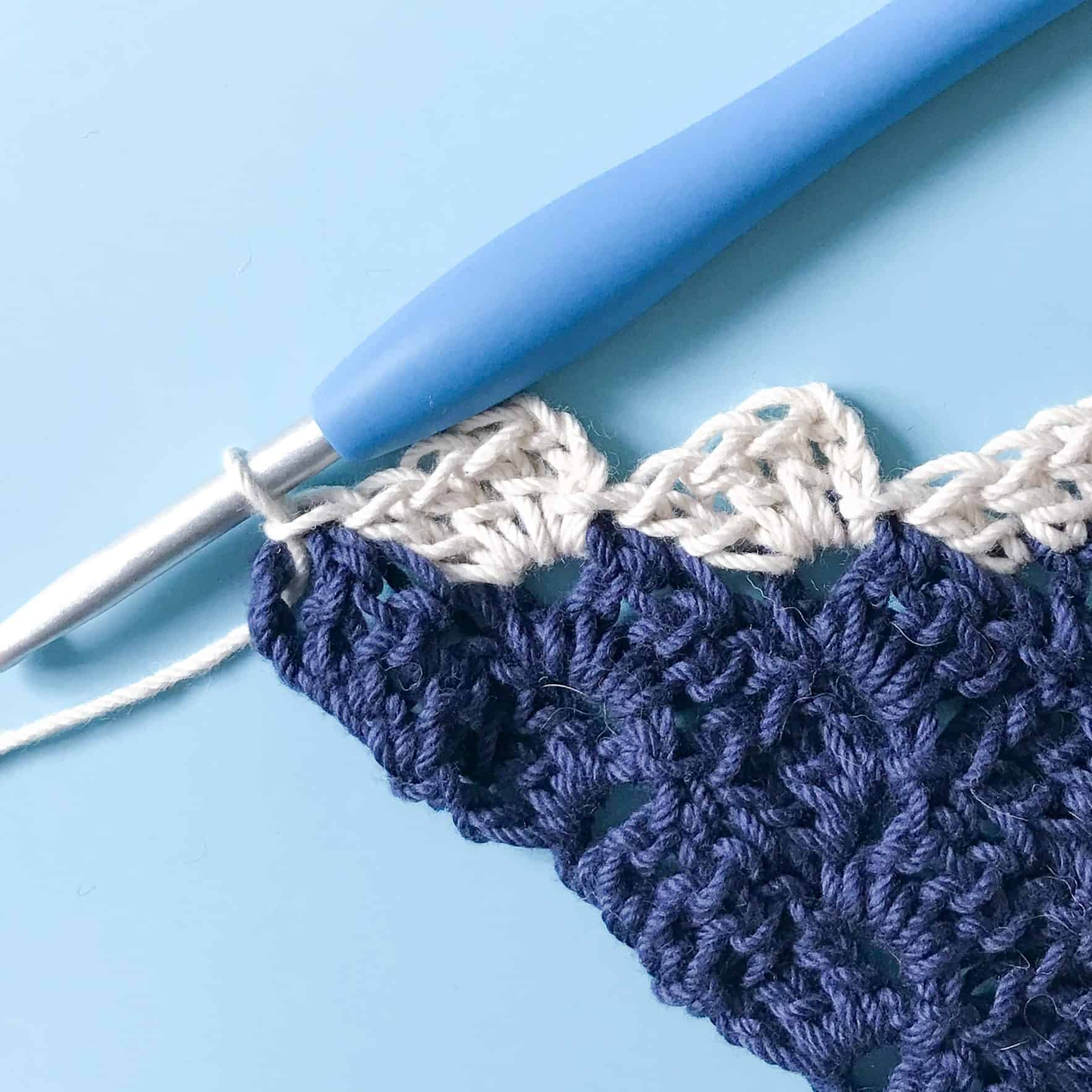
The short answer is that term “Corner to Corner” (c2c) crochet is used interchangeably to describe both a stitch pattern and a design technique! This article will explain what both versions of the term mean.
One thing to note before we start is that ‘c2c’ is simply the common abbreviation for corner to corner.
C2C as a crochet design style or construction method
Essentially, c2c as a construction method is where you work a square or rectangle from one corner across to the next on the diagonal.
You start with a single stitch or stitch pattern repeat, increase each row until you reach the widest part, then start decreasing on each row back to the opposing corner of your shape.
If you’re making a rectangle you will work non increase rows to achieve the desired length before the decrease section starts.
It’s not possible to give precise instructions for c2c in this context because there are infinite variations. The c2c design method can be worked in any stitch pattern which lends itself to the geometry.
For example. the Flump bolster you see below (remember flumps!?!), which I designed for Inside Crochet Magazine earlier this year, uses the c2c design style to create the rectangle body of the cushion which is wrapped around the length of the bolster.

The flump is made using single crochet (UK double crochet) stitches rather than the ‘traditional’ c2c stitch pattern, which I will describe next.
The Corner to Corner Stitch Pattern
The ‘traditional’ c2c stitch pattern (and I use the term traditional to mean most popular, typical or commonly thought of at the moment) is worked using US double crochets (UK treble crochet) in a diagonal variation of the block or brick stitch pattern.
Note that Block and Brick patterns also mean different things to different people but that is for another post! You can see my version of the block stitch as part of my Maslow’s Rainbow free Pattern!).
You can find a complete c2c stitch pattern tutorial here. It includes a step by step photo guide (including how to decrease).
This is what the first few rows of the typical corner to corner stitch pattern will look like.
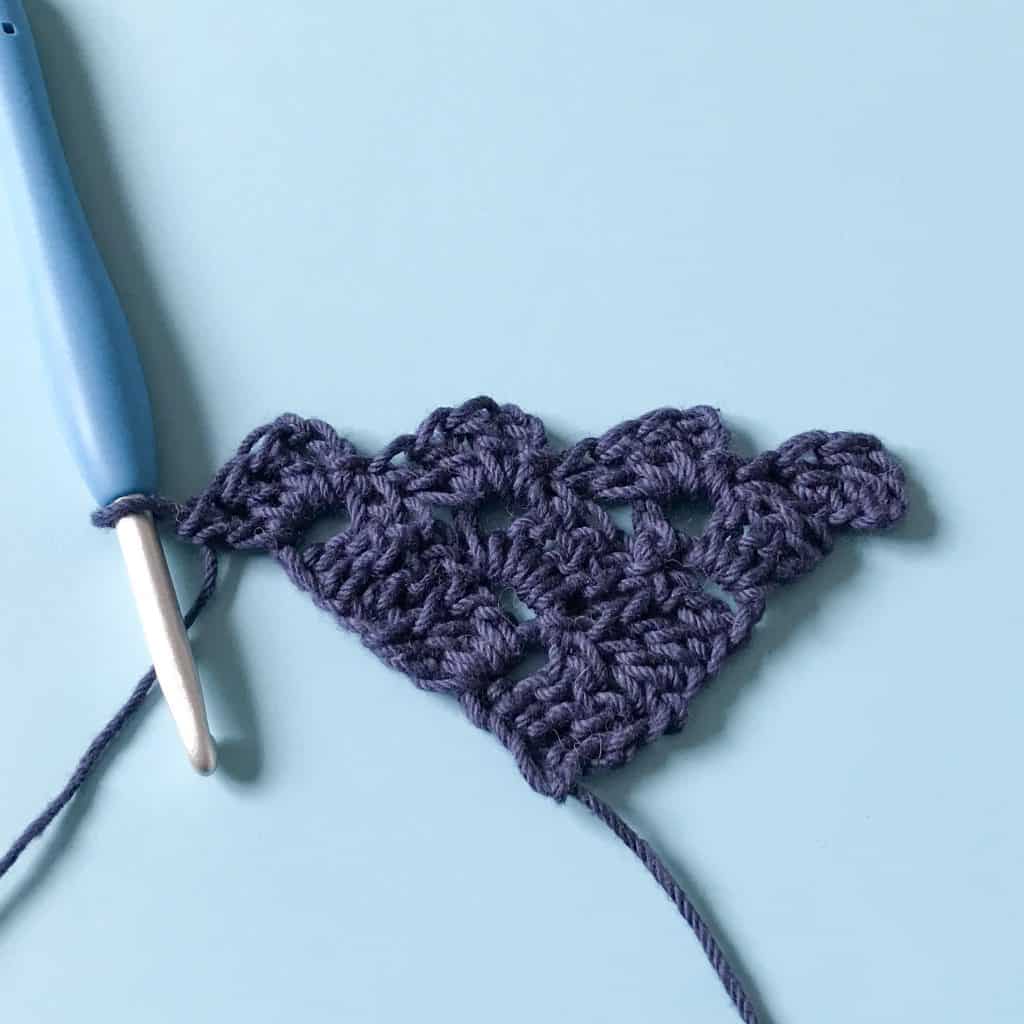
Essentially, you work 3 double crochet (UK treble crochet) into a chain space to create a square. The squares are worked on the diagonal and stacked, working back and forth in rows to build the shape.
Another (possibly mind bending) way to look at it is this: The c2c stitch pattern (by definition) uses the c2c design method, whereas the c2c design method can use any stitch pattern!
You may also see or hear people referring to mini-c2c – this uses the same stitch pattern as above but worked with half double crochet (UK half trebles).
I personally love the corner to corner stitch pattern for its versatility. It is great for home wears, graphgans (where you use different colours for each block to make a picture, like pixels!), accessories and even garments.
The Block Rocking Poncho is a free pattern made using the c2c stitch pattern and it’s one of my favourite s to wear!

I hope that you find this post useful to distinguish the two common uses of the term Corner to Corner – and that you’re more interested in giving it a go if you’ve never worked it before. It really is such fun to work!
The article itself was inspired by a debate I recently saw on facebook. The original poster was having a rant as she felt that “corner to corner” was purely a design technique and not a stitch pattern in itself.
Let’s just say a lively debate ensued! (We all know how facebook can get!!)
Anyway, the debate really opened my eyes about how people view it very differently, so I decided to write a simple explanatory post balancing both views.
For me personally, I think it’s about context – it can mean both things, just as a granny square can be made with clusters of 3 double crochet (UK treble crochet) together or in solid rows (and a hundred other variations!). Both are still granny squares even though the first is the ‘traditional’ version!
Thanks for reading, and if you think this post would help your fellow crocheters too, please do use the buttons below to share it!
Happy Hooking
Dx


How do I make a C2C 60 inch x 60 inch square??? A pattern that is soft and mushy – using Caron Simply Soft? That is what my friend wants. Thank you!
You can swatch with different hook sizes until you get a fabric that fits that description to your satisfaction. I’ve not used Caron much so can’t comment on what would work with that yarn..